





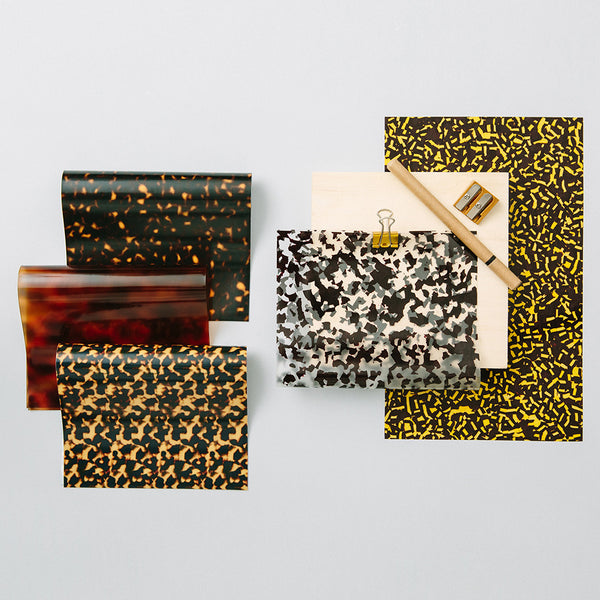
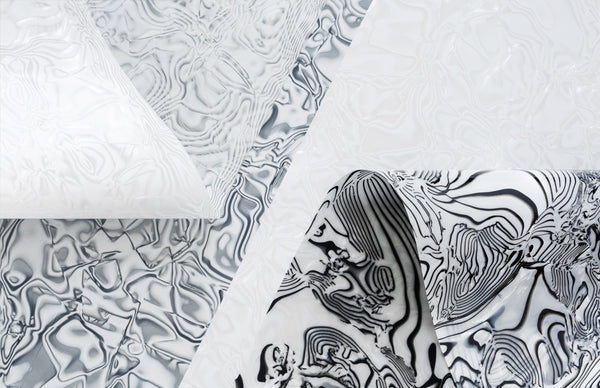



Many times, when referring to the material that makes up glasses, we hear people talk about celluloid or simply plastic instead of Cellulose Acetate. However, due to its unique characteristics, the latter deserves to be called by its proper name.
Those who today refer to glasses as being made of celluloid are confusing historical periods. We can say that celluloid is the ancestor of cellulose acetate, but today, due to its high flammability, it is no longer used for this purpose except for high-quality productions in Japan, but we are talking about a niche.
Celluloid was invented in 1869, following a contest held by the Phelan company of New York, a billiard ball manufacturer, which offered a substantial prize for anyone who could find a substitute material for ivory from elephant tusks for that particular use.
The invention is attributed to American printer John Wesley Hyatt, who, by treating cellulose with nitric acid, camphor and alcohol, obtained the first thermoplastic material: celluloid (the name was registered in 1873).
Needless to say, this invention was a huge success in the years to come: it was used for eyeglasses but also for toys, films, brushes, dice, buttons, packaging materials and many other objects that soon became staples in people's domestic lives until the mid-20th century. It is estimated that it was used for no less than 25,000 applications.
Such widespread use, contextualized in the historical period, can be explained by the general and innovative characteristics of celluloid: a thermoplastic material, easy to work with, wide range of colors and durability.
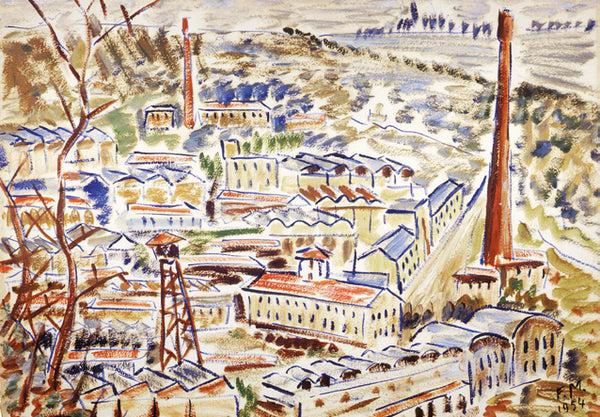
Mazzucchelli, who initially imported celluloid sheets from America to create finished products, wisely decided to produce this material in Italy. Moreover, thanks to a trip to the United States by Silvio Mazzucchelli, the company acquired the know-how from the Du Pont family to obtain cellulose nitrate, the base polymer for producing celluloid.
Thus, in 1924, the Società Italiana della Celluloide was founded, which on one side produced cellulose nitrate from cotton linters and on the other used this raw material for the production of celluloid sheets destined both for sale and for the production of finished products of the companies owned by the Mazzucchelli family.
About ten years later, always looking to the future, Mazzucchelli decided to focus on the production of plastics different from celluloid but synergistic for the factories: thus, we come to talk about cellulose acetate (1936), at the time defined as non-combustible celluloid, also produced from cellulose, whose invention is attributed to French physician and chemist Paul Schützenberger.

Cellulose acetate is a modified natural polymer: it derives from cellulose. Cellulose represents the structural backbone of the entire plant kingdom and is undoubtedly the most widespread polymer on the earth's surface.
The cellulose used to obtain cellulose acetate can be extracted from wood pulp or the most valuable part of the cotton flower. This wood comes from plantations whose cultivation and harvest are managed according to the guidelines of the Forest Stewardship Council (FSC).
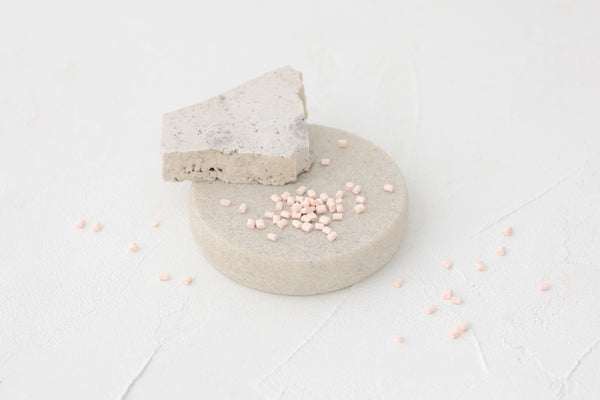
From these sources, the purest part of the cellulose is extracted, which is subsequently treated with acetic anhydride and transformed into cellulose acetate powder.
This powder, in Mazzucchelli's processes, is mixed with substances that confer the desired hot workability, flexibility and toughness: the so-called plasticizers that make it a thermoplastic polymer with characteristics suitable for the final use, and one of the most important raw materials for the production of glasses.
And it is precisely these plasticizers that have been the subject of study by Mazzucchelli, who in 2010, anticipating market demands, developed M49, a full-fledged bioplastic.
M49, in fact, is composed of cellulose acetate and a vegetable-based plasticizer. The resulting formula is mainly made up of materials derived from renewable sources.
But that is another story or, rather, the future. A sustainable future.
