






Timeline Story
Every material holds endless possibilities. It is the vision of those who imagine it, experiment with it and transform it that brings those possibilities to life.
For more than 175 years, Mazzucchelli 1849 has pursued a path of experimentation, craftsmanship and research aiming at exploring the potential of materials. Generation after generation, the company has combined technical expertise with artisanal sensitivity, developing innovative solutions that have evolved alongside society, design and industry. From everyday objects to the world’s finest eyewear, Mazzucchelli has helped shape new applications for plastic materials, with cellulose acetate becoming the iconic expression of its commitment to quality, creativity and performance.
This timeline traces the milestones that have shaped the journey of Mazzucchelli 1849: a story of people, ideas and innovation that has accompanied and interpreted the evolution of materials, while continuing to reinvent their possibilities.
1849-1912
From a small artisan workshop founded by Santino Mazzucchelli, the company rapidly evolved into a leading manufacturing enterprise. This period laid the foundations of Mazzucchelli’s industrial culture, combining entrepreneurial vision, technical expertise and a strong commitment to growth and innovation.

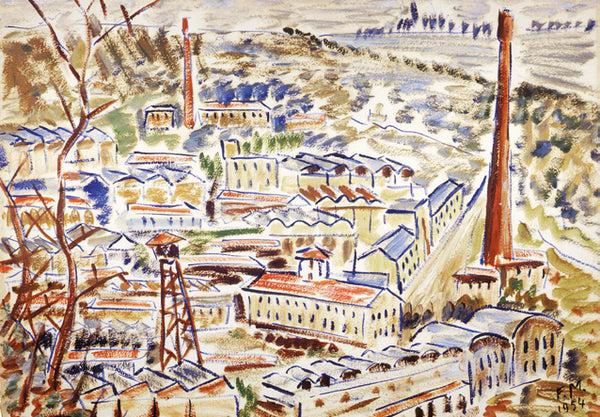
The company was founded by Santino Mazzucchelli as a small workshop. Initially, combs and buttons were produced using natural materials such as horn, bone and tortoiseshell.
After a brief period in Milan, the factory permanently settled in Castiglione Olona
(VA). The company’s size grew rapidly; by 1869 it already employed around 200
workers. Just 20 years after its foundation, what had started as a modest
workshop had blossomed into a significant manufacturing enterprise, with a
growing customer base and a steadily rising demand for its products.
Pompeo Mazzucchelli quickly demonstrated his visionary business acumen, possessing the foresight to anticipate future trends and capitalize on market opportunities.
A new plant dedicated to the processing of celluloid, an early plastic patented by John Wesley Hyatt in 1876 as an ivory substitute, comes into operation. The celluloid is purchased abroad. The company is named “Società Anonima
Mazzucchelli (SAM). The main products offered were toiletries, fashion accessories, gas masks, dolls, radio coverings, toothbrushes, musical instruments, glasses, flexible and unbreakable glass later used in the war industry.
Pompeo Mazzucchelli is awarded the honor of Cavaliere al merito del Lavoro. The Cavalieri del Lavoro in Italy are entrepreneurs awarded for outstanding achievements in sectors such as industry, commerce, agriculture and finance. Recipients are distinguished by entrepreneurial success, strong moral integrity and a commitment to improving society’s living and working conditions.
1920–1941
The introduction of celluloid and, later, cellulose acetate marked a transformative phase in the company’s history. Through technological innovation, strategic partnerships and the beginning of eyewear production, Mazzucchelli established the foundations of the business that would define its future.

Eyewear production officially begins, marking the start of a new business segment for the company. This activity continued for several decades until 1983.
The “Società Italiana Celluloide (SIC)” is officially established with the aim of producing and trading celluloid and related products.
Pompeo and Silvio Mazzucchelli signed a collaboration agreement with the American company DuPont for the production of celluloid. DuPont was (and still is) a major U.S. chemical multinational. It originally specialized in gunpowder production and later became one of the world’s leading companies in chemical innovation and materials, including plastics such as nylon and industrial polymers. The collaboration with DuPont ended in 1949.
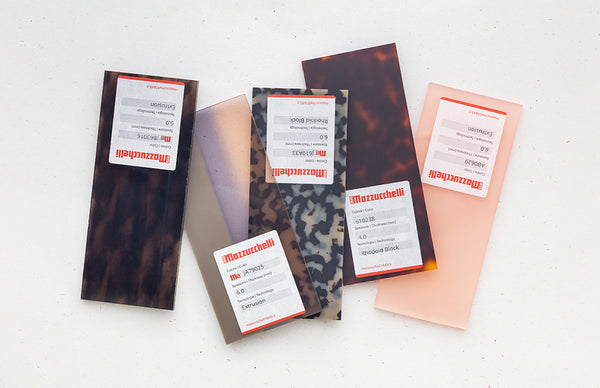
The Company decides to start the production of Rhodoïd, a cellulose acetate material already known on the market and originally introduced as a commercial brand by Rhône-Poulenc in the early 20th century, quickly recognizing its enormous potential and advantages over celluloid, particularly its lower flammability and easier processing. This marked the beginning of a new era for the company: the cellulose acetate era. Derived from plant cellulose, this natural polymer soon became the primary material used in Mazzucchelli’s production. Its strength, durability and versatility in coloring and shaping made it especially suitable for eyewear frames. By rapidly focusing on the optical sector, the company established itself as a leading reference in the eyewear industry.
Silvio received this title on October 31st, 1941. His father, Pompeo, had received the same honor in 1912.
1942–1973
In the post-war years, Mazzucchelli expanded beyond manufacturing, investing in education, welfare, design and new industrial applications. This period reflects a broader vision of industry, where technological progress, social responsibility and creative experimentation developed side by side.

One of the belief that was particularly deeply rooted in Silvio Mazzucchelli was that:"cultural inequality is far more serious than economic inequality." From this conviction arose the founding, in 1942, of the Professional Training Center for workers in Castiglione Olona which soon became a model for other schools in Italy and abroad.
The Agnelli family enters the SIC shareholding structure through Vetrocoke, strengthening its ties with the company led by Silvio Mazzucchelli. This step reflects how SIC grew not only through industrial production but also through strategic relationships between major industrial families and entrepreneurs, where partnerships and shareholdings were key to expansion and influence in the sector.
The SAMCO trademark, dating back to 1946, was originally registered by SAM (Società Anonima Mazzucchelli) for the production of brushes, combs in celluloid and plastic materials, toiletry items, boxes, ping pong balls, and other everyday products. It was a time when plastics were emerging as the new material for daily life, gradually replacing objects traditionally made from other materials.
Franco Mazzucchelli, Silvio’s son, joins the Board of Directors. Under the leadership of Franco and his brother-in-law Giorgio Orsi, husband of Silvio’s daughter, Adele, and the supervision of Silvio, the company experienced times of great expansion and prosperity.
The collaboration between Kartell and Samco marked an important moment in the development of industrial design and plastic manufacturing in Italy. Kartell, founded in 1949 by Giulio Castelli, was already becoming a pioneer in the use of innovative materials for household products and furniture. Samco, an industrial partner active in plastic processing, contributed technical expertise and production capacity to support Kartell’s experimental approach.
The co-operation between Samco and Kartell enabled Mazzucchelli to win a series of design awards: In 1955, the polyethylene bucket with lid KS 1146, designed by Gino Colombini and produced by Kartell-Samco, received the prestigious Compasso d’Oro Award, one of the most important recognitions in Italian industrial design. A carpet-beater, a bath brush and a plate-rack were exhibited at the Triennale di Milano in 1957 Over the following years, several Kartell-Samco household products were acknowledged for their innovative use of plastic materials, functionality and modern aesthetics. Today, some of these iconic objects are preserved in important design collections, such as MoMa and ADI Design Museum.
The agreement between Samco and Kartell proved to be strategic, as it was the combination of their respective technical and production expertise that enabled the creation of several small masterpieces of everyday domestic life. One of those was Gino Colombini’s bucket KS 1146. Being an excellent example of mid-20th-century design innovation, combining practicality with modern aesthetics, in 1955 the bucket KS 1146 was awarded the prestigious Compasso d’Oro, of the oldest and most distinguished design awards, recognizing excellence in design and innovation. The work of Gino Colombini has been exhibited at the MoMA in New York.
In 1955, from the merger of S.I.C. and S.A.M., Mazzucchelli Celluloide S.p.A. was established. The new company was organized into divisions and expanded its presence in the processing of various plastic materials including: Polystyrene, ABS, PVC film for the pharmaceutical sector, Cellulose acetate, Celluloid. The company has also produced a wide range of finished products over the years, including brushes (Verbania), skis (Maxel), ping-pong balls (SAMCO - Società Anonima Mazzucchelli Castiglione Olona), eyewear (SAMCO), and many others, eventually including the production of floppy disks (through an agreement with Nashua).
Polymer materials, produced by the company Domosic, belonging to the Mazzucchelli Group, were also extensively used in the interior spaces, including flooring, wall coverings, and handrails. The material was also used to create polystyrene tiles for the creation of polychrome panels with unprecedented chromatic capabilities, which Annibale Fiocchi, the architect who designed the building, commissioned from his friend Marcello Nizzoli for the entrance hall and the lobbies on each of the four office floors.
The experimentation with plastic materials extended beyond objects. A particularly interesting innovation was the application of polymer materials, mostly produced internally by Mazzucchelli, in architecture, notably in the Mazzucchelli building, which accommodated the company's new offices and was inaugurated in the late 1950s in Castiglione Olona. Designed by architect Annibale Fiocchi – renowned for his work on the Olivetti building in Milan – this project provided a unique opportunity to experiment with polymers in architectural design.
At the beginning of the 1960s, Silvio Mazzucchelli promoted an innovative welfare initiative by building a series of homes for the company’s workers in Castiglione Olona. The project was designed not only to attract workers from different parts of Italy, but also to offer them and their families dignified living conditions and foster their full integration into the local community. This initiative represented an early and forward-looking example of corporate welfare and social responsibility.
In 1963, SAMCO began the production of table tennis balls, widely appreciated for their quality, precision and durability. Over the years, SAMCO balls were officially used by the Italian Table Tennis Group (CONI).
The company's know-how achieved particularly innovative results in the production of ABS, an industrial resin used in the manufacturing of Maxel skis, which were used by some members of the “Valanga Azzurra,” the legendary Italian alpine ski team that dominated international competitions during the 1970s. Zeno Colò, one of Italy’s greatest alpine skiers, also collaborated as a ski tester for Maxel. The production of Maxel skis continued until 1982.
Polimero Arte was a center of aesthetic research and an avant-garde laboratory created, at the behest of Mazzucchelli, in Castiglione Olona, where internationally renowned post-war artists such as Carla Accardi, Camillian Demetrescu, Giovanni Santi Sircana, Guido Strazza, Man Ray, and Marcello Morandini created their works. It is renowned for its innovative approach to polymer processing and artistry. Established as a hub for creative experimentation, the studio specialized in crafting unique sculptures, installations, and decorative pieces using various polymer materials. Led by a team of skilled artisans, artists, and designers, Polimero Arte blended traditional craftsmanship with modern techniques to push the boundaries of polymer art. Its dedication to quality and innovation earned it recognition both locally and internationally, making it a prominent destination for art enthusiasts and collectors alike. Many of the works created during the Polimero Arte period are now part of the collection of the Museo Arte Plastica (MAP) in Castiglione Olona, where they continue to testify to the artistic and cultural legacy of this pioneering experience.
1977-1996
Mazzucchelli strengthened its role as a global reference for the eyewear industry, promoting creativity, trend research and collaboration with designers, manufacturers and cultural institutions. The company evolved from a material producer into an active contributor to the language and culture of eyewear.

The “Centro O" was created as a repository of creative heritage and style coordination, serving as a connecting point between Mazzucchelli and manufacturers. In fact, Centro O represented a bridge between industry and culture, strengthening relationships with manufacturers and contributing to the development of a shared design language. This initiative helped position Mazzucchelli as not only a producer of materials, but also an active promoter of industrial culture and creative exchange. Within this context, the periodical “L’O” was created as an important cultural and design publication. It explored themes related to fashion, aesthetics, and material innovation, helping to spread Mazzucchelli’s vision and reinforcing the company’s role as a creative reference point within the eyewear industry.
A key figure behind this vision was Regina Rossi, founder of Centro O and a leading expert in color research and aesthetic trends in eyewear design. Through her work, she contributed to transforming eyewear from a purely functional object into a fashion and cultural statement, influencing generations of designers and manufacturers.
Today, Centro O is guided by Elena Orsi Mazzucchelli, member of the sixth generation of the Mazzucchelli family, continuing the company’s tradition of innovation, creativity, and cultural research within the eyewear industry.
Giovanni, Silvia and Marco Orsi Mazzucchelli, Giorgio and Adele Orsi’s sons, join the company, representing the fifth generation of the Mazzucchelli family.
The art exhibition «Dalla Tartaruga all’Arcobaleno», organized in collaboration with the «XVII Triennale», stems from Mazzucchelli's desire to illustrate the countless applications of Rhodoid, a material so versatile, colorful, and resistant. The exhibition was organized by Franco Mazzucchelli with the support of his niece Silvia Orsi Mazzucchelli, a figure who, from that moment onward, distinguished herself within the company for her interest in and development of projects related to art, as well as for fostering relationships between renowned artists and Mazzucchelli materials. Designers and architects such as Bruno Munari, Ettore Sottsass Jr., Achille Castiglioni, and many others were invited to create household items, work tools, and various objects, fully exploring the great aesthetic and technical potential of Rhodoid.
Mazzucchelli attended the exhibition “Scènes de Mode scenes du monde” which took place in Paris. This exhibition was an internationally acclaimed event, designed as a spectacular journey exploring the origins and meanings of fashion. It highlighted fashion's cultural expressions, social influences, and roles within society and industry. Mazzucchelli, the sole invited plastics manufacturer, showcased the creativity and versatility of cellulose acetate. This participation underscored Mazzucchelli's innovative products, rooted in tradition, craftsmanship, and technology. The exhibition emphasized Mazzucchelli's global impact and leadership in the fashion industry.
Mazzucchelli opens Hua Yi Plastic in Shenzhen, its first plant dedicated to the production of extruded cellulose acetate sheets, in order to strengthen its presence in the Asian market. This strategic move was driven not only by the need to compete locally, but also by the desire to provide a more efficient and responsive service to its customers, many of whom were gradually relocating their production activities to China.
By establishing a direct presence in Shenzhen, Mazzucchelli was able to be closer to its key clients, reduce delivery times and better adapt to the evolving dynamics of the global supply chain. At the same time, the company proved once again its innovative and forward looking approach, becoming one of the first European companies in the sector to establish manufacturing operations in China.
1997–Today
With international expansion and continuous investment in research, Mazzucchelli entered a new era of global development. Innovation in materials, strategic partnerships and a strong commitment to sustainability continue to drive the company’s growth while preserving its heritage and values.

In 1999, Mazzucchelli celebrated 150 years of excellence in the eyewear and fashion industry. This milestone marked a significant achievement, showcasing the company's dedication to quality and innovation. Honoring its rich heritage, Mazzucchelli remained true to the vision of its founders while embracing modern advancements. The celebration underscored the company's ability to seamlessly blend tradition with future oriented strategies. With a commitment to excellence, Mazzucchelli looked forward to continuing its legacy of craftsmanship and leadership in the global market.
On the occasion of its 150th anniversary, the company also published the book “The Tradition of Modernity”, which retraces the history of Mazzucchelli and highlights its evolution between industrial innovation and family heritage.
Acquisition of Shanghai Da-Shen, a former JV between a Chinese state owned company and the Japanese Daicel, for the production of block acetate. Block acetate represents one of Mazzucchelli’s most iconic and distinctive technologies, used for highly sophisticated products characterized by unique aesthetic depth, exclusive patterns and material performance. The acquisition reflects the ambition to bring to Asia the know-how developed over decades in Castiglione Olona, transferring not only production expertise but also a culture of innovation and material excellence that has defined the company identity.
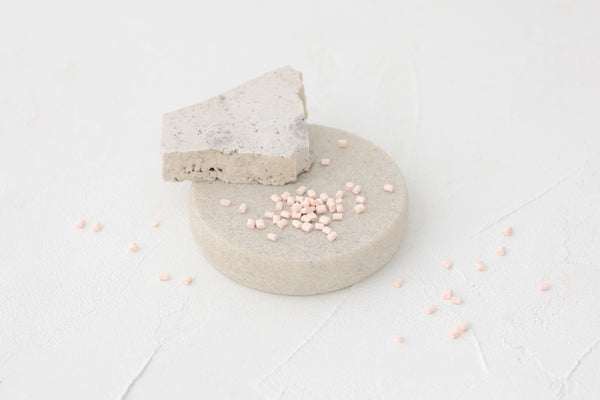
Acquisition of the know-how for the production of Tenite cellulose acetate granules using the original formula developed by Eastman Chemical
Establishment of the company GU MA, JV with the Gurit Holding group, for the manufacturing of acetate sheets for sports and safety. In 2009 GU MA becomes a 100% Mazzucchelli’s group company.
Mazzucchelli 1849 has foreseen the market's evolution by developing in its labs a formula that merges the traditional physical mechanical characteristics with a strong focus on eco-friendliness: M49. The conventional plasticizer has been substituted with a plant-derived plasticizing solution, transforming M49 into a bioplastic with significant bio-based components.
Mazzucchelli and Eastman Chemical (the world biggest plastic cellulose acetate manufacturer) establish a double JV both for the production and distribution of cellulose acetate granules in Asia. The JV, through the joint know how and expertise and thanks to a more efficient supply chain, optimize market coverage and support business expansion across the Asian countries.
In 2013, the Indian company Interplex India and Mazzucchelli entered into a joint venture to create the company Interplex Mazzucchelli for the commercialization of cellulose acetate sheets in the Indian market. In 2022, Interplex Mazzucchelli started the production of acetate sheets.
In 2015, the use of a different polymer in the block process was patented, a decorative film made in aliphatic TPU. This product allows access to new markets thanks to the thinness of the sheets produced, their flexibility, and the depth of the aesthetic patterns.
Mazzucchelli's Italian production of extruded products is concentrated at the Castiglione Olona site thanks to the creation of a new modern plant, which enabled the transfer of the extrusion department from Venegono Superiore.
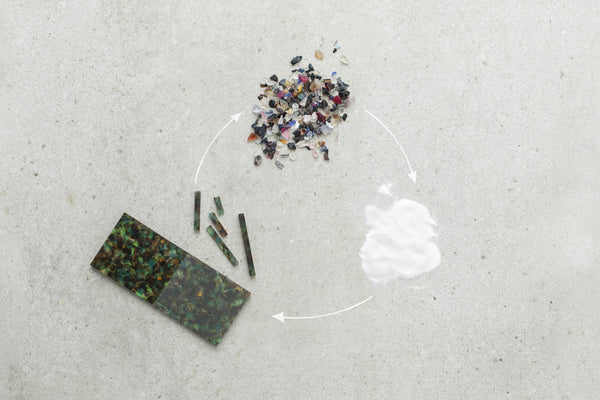
Acetate Renew™ is a fully sustainable material that uses recycled waste plastics in place of fossil-based resources. Acetate Renew™ is produced through Eastman’s Carbon Renewal Technology (CRT). This technology is a chemical recycling process which consists of breaking down plastic waste into primary molecules which are the main elements to produce acetic anhydride. Acetic anhydride reacts with cellulose to produce cellulose acetate. The result is a cellulose acetate composed of 60% bio based and 40% certified recycled content. Therefore, this process creates a 100% sustainable acetate flake using the waste normally sent to landfills thus contributing to the reduction of greenhouse gas emissions.
Luxottica and Mazzucchelli entered into an agreement to develop and produce a highly sustainable type of acetate, accessible to all market players.
In 2023, a new acetate sheet production facility was established in Vietnam. This strategic move was driven by customers’ growing demand to shift production away from China, while still maintaining a strong presence within Asia.
The year 2024 is a year of celebration. Mazzucchelli is celebrating 175 years since its founding. Present at the celebration of this important milestone was also the sixth generation of the Mazzucchelli family: Umberto and Corrado Brustio together with Davide, Elena and Charlotte Orsi Mazzucchelli, all currently active in the company and holding top executive positions.
The year 2026 marks the start up of the new block plant.
It highlights the company’s commitment to improving efficiency, production capacity, sustainability and technological advancement. The newly constructed building has been designed in line with Mazzucchelli’s long-standing commitment to sustainability and respect for the local territory. Built to last, it combines durability, responsible use of resources and attention to environmental impact, reflecting the company’s approach to long-term industrial development.