




材料与加工
醋酸胶板
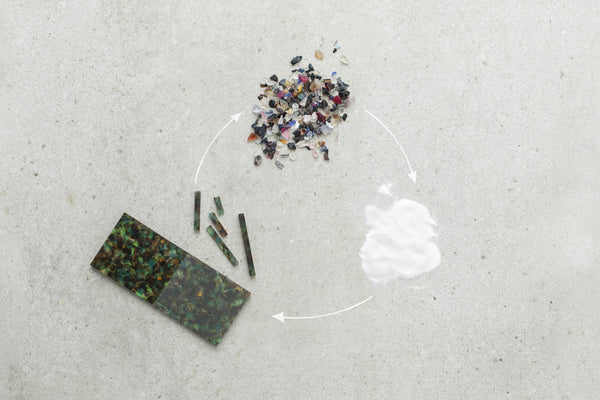
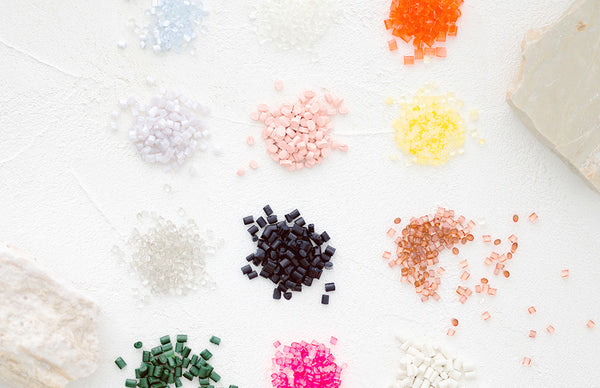
醋酸纤维素是一种天然的改性聚合物。
为了获得醋酸纤维素,我们从选择可再生资源开始,例如:特定品种的树木和棉花废料。
我们从这些原料中提取最纯净的纤维素部分,然后用醋酸酐进行处理,转化为醋酸纤维素粉末。
生产工艺:概览
在Mazzucchelli的加工过程中,这种粉末与增塑剂紧密混合,赋予其所需的热加工性、柔韧性和延展性。
其他添加剂可以根据需要少量添加,例如:光稳定剂、热稳定剂、着色剂(染料和色料)。
Formulations offered by Mazzucchelli for the sheets are:
- 标准配方,采用DEP塑化;
- HX配方,比之前的硬度更高;
- M49 formulation, or biobased. Phthalate plasticizer has been replaced by a proprietary plasticizing solution of vegetable origin.
Mazzucchelli的生产工艺是:
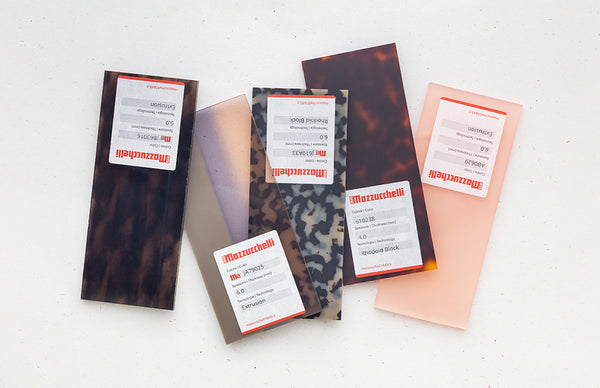
- Block process: process of sophisticated craftsmanship which allows to obtain three-dimensional designs ranging from natural effects, through the reproduction of fabrics to reach geometric effects of great impact and complexity. The raw materials used in this process are Cellulose Acetate powder, plasticizers and solvents; these raw materials are mixed together until a malleable dough is obtained which, after heavy filtration to remove any impurities, is colored by a calendering process that homogenizes the colors in the mass. At this point, again through the calendering process, the mixture is reduced in the form of raw sheets which are superimposed in presses and, by means of heat and pressure, melted. The product obtained from the fusion is a monocolor block. To obtain our effects, we start with at least two monocolor blocks that are reduced to sub-formats and then reassembled until a new block is obtained. This process can be repeated several times obtaining more or less sophisticated products. After the last pressing, the final sheets are cut to the desired thickness. These sheets, after appropriate removal of the solvent by special ovens, are "straightened" in flat presses and inspected one by one.
This process is unique in the world and thanks to our decades of experience it allows us to create infinite aesthetic effects to satisfy the needs of designers.
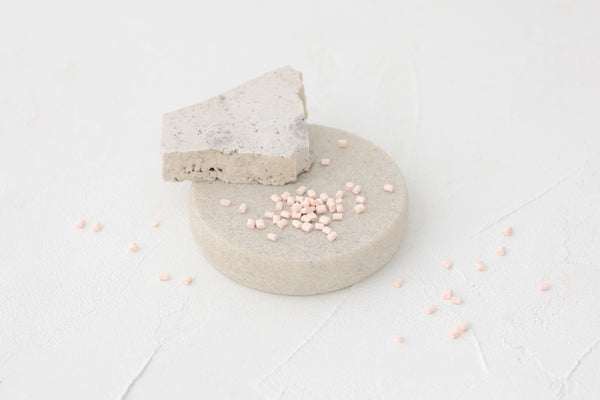
- Extrusion process: this is an industrial process which allows to obtain sheets from colored granules. This process involves the use of a co-extrusion line where granules of varied colors are melted and passed through a dye. Once outside the dye, the sheet is cooled and cut into the appropriate size. In this case Mazzucchelli's experience is poured into the design and construction of the dye which is a true work of engineering. As a matter of fact our designers, starting from the design of the sheets that we want to obtain, develop a dye that allows the union of several distinct flows of molten material that combine precisely within the sheet creating the design.
- 压缩工艺:将前两道工序的半成品切割成预定的形状后,再将其在模具中熔化,制成板材。这不同于模块工艺,因为其中不使用溶剂。产品在完成熔融之后即可使用。
- Lamination process: lamination allows multiplying the effects by combining different components, obtained from the previous three processes, in a new sheet by lamination. For example, it is possible to take a monocolor extruded sheet and laminate a thin block layer on it to obtain a frame that will have a variegated top or vice versa. This process also involves the use of components obtained through the printing process. Printing processes give the possibility to print any drawing on Cellulose Acetate sheets; they are:
- 丝网印刷:这是应用最广泛的印刷效果工艺,其中色点的界定或金属油墨的使用至为关键。
- 热转印:非常适合印刷精细设计。
- 艺术印刷:摄影质量的数字印刷。
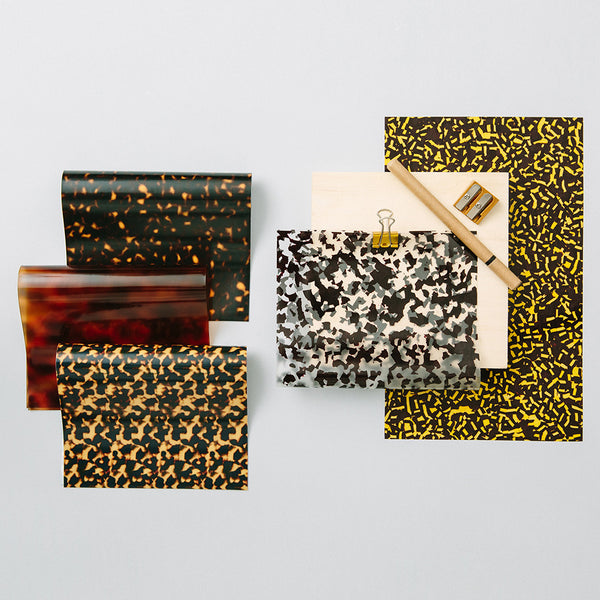
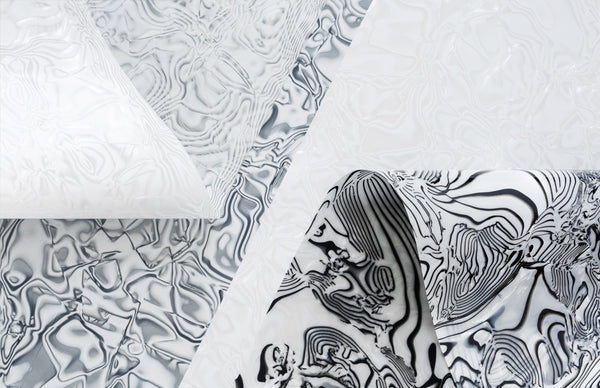
Cellulose acetate sheets can be produced in an infinite range of transparent, milky or solid colors, monocolor or multicolor, with the possibility of aesthetic effects that make them irreplaceable in many applications and in particular as raw material for the production of eyeglass frames or high-end fashion accessories.
特点
Mazzucchelli生产的醋酸纤维素板材的物理特性,按照工艺和配方,说明如下。
以下信息和数值虽然来自于几十年的经验,但是仅供参考,不作为任何形式的保证。
醋酸纤维素板材的特性数值:
|
|
参考标准 |
U.M. |
标准配方 |
HX配方 |
M49配方 |
| 屈服强度 |
ASTM D 638 |
Mpa |
26,2 |
35,6 |
25 |
|
断裂强度 |
ASTM D 638 |
Mpa |
36,5 |
46,3 |
36,9 |
|
屈服伸长 |
ASTM D 638 |
% |
3,8 |
4,8 |
4,5 |
|
断裂伸长 |
ASTM D 638 |
% |
56,1 |
41,9 |
58,5 |
|
弹性模量 |
ASTM D 790 |
Mpa |
1’613 |
2’006 |
1’380 |
|
洛氏硬度 |
ASTM D 785 |
R |
91,5 |
106,8 |
93 |
|
抗Izod冲击强度 |
ASTM D 256 |
KJ/m2 |
13,1 |
9 |
11,4 |
|
抗夏比冲击平均值 |
ISO 179 |
KJ/m2 |
161 |
162,6 |
149 |
此表显示各个配方的平均值,性能仅供参考,不应视为可接受的极限。客户可以根据性能需要,选择不同的配方。
耐化学性:
醋酸纤维素板对酸、碱和无机盐的稀释水基溶液、石蜡烃、高浓度酒精、油类和脂类有良好的耐受性。
When in contact with boiling water, surface whitening occurs. In order to heat the material for curving or mechanical deformation, as an alternative to the most common high frequency heaters, a heated bath of water and glycerine in equal parts is used (1:1).
如果与酒精、芳烃或氯化溶剂接触,会出现溶胀或增塑剂损失。
材料可溶于酮类。
强酸、强矿物碱、纯盐或浓氧化盐会导致化学降解。
鉴于其化学性质,用于生产所述板材的醋酸纤维素具有明显的吸水倾向。
下图表示在正常温度(23℃)下,长期处于不同相对湿度的环境中的吸收或解吸情况。
可以看出,在特别潮湿的环境中(95% RH),摄水量趋近于达到5%左右的湿度;然而,在干燥的环境中,则达到千分之几的含水量。

幸运的是,在实际情况中,很少出现长期处于此类极端条件下的情况:下图显示最常见的情况,可以看出,无论是从非常潮湿的材料开始,还是从非常干燥的材料开始,在相对湿度为50% RH时,材料趋向于达到2%的平衡湿度。

最后一个条件可以实现材料的最佳加工条件。
事实上,含水量对其物理和机械性能起着重要作用:
- 高含水量可以显著提高抗冲击性,但是会让产品变软,从而降低弹性模量和耐热性。
- 材料突然受热会增加其中所含水分的蒸气压,从而产生气泡;另一方面,极端干燥的情况会使其变得脆弱。
此外,尺寸特性也会受到含水量变化的影响:干燥条件会使质量略微降低,而在适当的潮湿环境中很快就会恢复原状。
生产的具有生物兼容性的醋酸纤维素板材
Mazzucchelli 1849生产的具有生物兼容性的醋酸纤维素板材。
根据欧盟(EU) 2017/745关于医疗器械的规定,带有眼科镜片的镜框属于I类医疗器械。
要评估这些医疗器械的生物兼容性,必须根据ISO 10993标准所定义的测试规定和程序进行测试。
法规和标准均考虑多个因素,以此来将医疗器械定义为具有生物相容性:
- 使用历史;
- 文献数据;
- 体外或体内实验。
值得注意的是,法规和标准要求医疗器械的制造商对其产品进行认证,而不是原材料或半成品的制造商。
Mazzucchelli始终致力于符合与其材料相关的所有法规和安全要求,希望通过评估产品的供应条件来预测市场要求,以便能够为客户的认证工作提供支持。
Mazzucchelli has been producing, with proprietary formulas, Cellulose Acetate sheets since 1936 and has organized internally a structured and thorough method for the management and the evaluation of the substances and the collection of reports from the market. Mazzucchelli has also carried out the tests required by the ISO 10993 standard on the two main formulations (Standard Plasticized Material DEP and M49) with positive results and has submitted the entire documentation to medical consultants working in hospitals who, in turn, have provided favorable opinions on biocompatibility.
The whole documentation, through which it was possible to achieve these positive results, has been collected in an organized way in a dossier named "Profilo di sicurezza delle lastre di acetato di cellulosa Mazzucchelli " and will be made available, upon request, to the Authorities responsible for any verification of compliance with Regulation (EU) 2017/745.
ANFAO意大利全国光学仪器制造商协会,委派一名顾问进行审查,在审阅了文档之后,认可了Mazzucchelli的正确方法,并积极评估了所提供的证据。
Mazzucchelli开展的工作结果仅适用于该集团所有下属公司生产的醋酸纤维素板材。
The foregoing only refers to Mazzucchelli products which has been supplied and is guaranteed by the ability to properly select and monitor the components used. In this regard, we point out that the aesthetic (albeit similar) reproductions of our products formulated by Mazzucchelli's competitors do not necessarily imply the use of the same components and therefore might not be as safe and suitable for the use in Class I medical devices.
Mazzucchelli therefore guarantees that its products, on the basis of the tradition of use, the extensive literature collected and the tests carried out, can be considered non-irritants and non-skin sensitising. Nevertheless, it cannot be ruled out that individual cases of irritation or skin sensitisation due to one or more constituents used may occur.
加工
The working methods of Cellulose Acetate sheets are part of the know-how of eyewear manufacturers and depend partly on the technological solutions used.
However, we think it is appropriate to make operators aware of some phenomena that may affect the final quality of the products.
注意:在每个暴露的阶段中,都必须使用与工艺条件和所用仪器相匹配的个人防护设备。
存储
我们生产的板材所使用的材料是一种不易燃的热塑性聚合物,因此不需要任何特殊的安全预防措施来进行存储。
正如在“特性”一章中所提到的,产品的温度/湿度对于机械特性和可加工性起着非常重要的作用;因此,关键在于,板材要在最佳条件下进行加工,这可以通过预先设定合适的条件来加以实现,或者更确切地说,应当存储在温度和湿度受控的环境中。
存储或配置的最佳条件是温度在20℃-25℃左右,相对湿度为45%-55%。
就存储方式而言,水平堆放(在原包装中的板材优于未包装的板材)实际上是最简单且最容易接受的方式。为了避免堆放在外侧的板材与中心位置的板材之间出现差异,建议在开始加工之前,在上述温度和湿度条件下,先将板材在合适的架子上逐一悬挂放置几天。
在烘炉中延展板材或平板是一种常见的做法。
M49 suggestions for storage: for the correct storage of this product it is suggested to stack it separately from the standard plasticizing material. Under certain environmental conditions, where M49 sheets were stacked with standard plasticizing sheets, plasticizer migrations could be observed, mainly in the contact areas, which generate a superficial oiliness. If this phenomenon occurs, it is sufficient to leave the material in the air for a few hours. In doing so, the oiliness will be reabsorbed; alternatively you can use a clean cloth and remove it manually.
刨削
必须始终使用锐利的刀具执行此操作,并且进料保持恒定。过高的刨削速度会导致材料表面撕裂并出现缺陷。建议在刨削材料时,每次最多刨去0.4 mm,如果需要去除的厚度超过0.4 mm,建议平衡刨削量(例如:需要去除的厚度为0.6 mm,建议每次刨去0.3 mm)。
切割
此操作用于眼镜生产中,将板材缩减为带状,然后将带状缩减为片状,使其尺寸适合于制造眼镜。
常见的切割方法有:
- 冲切
- 圆锯切割
- 激光切割
对于方法1和方法2,建议使用锋利的刀具,以避免边缘出现缺口或缺陷。对于圆锯切割,建议使用厚度为2 mm的锋利刀片。
对于冲切,最好在20°C以上的温度条件下处理材料,为了避免可能出现的缺陷,可以稍微预热一下板材。
需要注意的是,激光切割是一种热切割,所使用的高温会造成聚合物劣化,并导致增塑剂损失,从而使切割区域附近的材料出现玻璃化和脆化。激光切割边缘进行几微米的磨蚀可以减少这种脆性问题。
根据不同的型号和激光源,切割条件也会有所区别。
下方的激光切割条件仅供参考,并非详尽信息:
|
工艺/配方 |
速度 cm/分钟 |
进给 m/秒 |
Power % |
Frequency % |
|
标准模块 |
|
|
|
|
|
厚度 30/10 |
350 |
6 |
15/90 |
3/6 |
|
厚度 40/10 |
260 |
7 |
25/90 |
3/6 |
|
厚度 60/10 |
150 |
5 |
20/90 |
3/6 |
|
厚度 80/10 |
60 |
10 |
40/90 |
2/4 |
|
|
|
|
|
|
|
标准挤出 |
|
|
|
|
|
th. 30/10 |
350 |
10 |
8/90 |
3/6 |
|
th. 40/10 |
260 |
7 |
25/90 |
3/6 |
|
th. 60/10 |
150 |
5 |
20/90 |
3/6 |
|
th. 80/10 |
50 |
5 |
40/60 |
2/4 |
|
|
||||
| 标准层压 | ||||
|
th. 30/10 |
350 |
10 |
6/75 |
1/2 |
|
th. 40/10 |
250 |
10 |
10/90 |
1/2 |
|
th. 60/10 |
100 |
5 |
20/90 |
2/4 |
|
th. 80/10 |
50 |
5 |
40/60 |
2/4 |
|
|
|
|
|
|
|
M49配方 |
|
|
|
|
|
厚度 40/10 |
300 |
5 |
15/90 |
2/6 |
|
厚度 60/10 |
130 |
5 |
40/90 |
2/4 |
|
厚度 80/10 |
93 |
5 |
53/90 |
1/2 |
| HX配方 | ||||
| 厚度 60/10 | 175 | 7 | 25/90 | 3/6 |
进行测试的机床的技术特点,设置切削条件:
额定光功率: 5÷115 W
最大典型功率: 135 W
发出的辐射波长:10.4-11.2 µm
需要注意的是,来自木材的醋酸纤维素与木材的特性非常相似,因此可以使用典型的木材加工刀具,在合适的使用条件,也可以用于加工板材。
Cutting tips for lamination: blades have to be sharp, it is also recommended to keep the thin top in the 'first impact' position of the blade. In case the 'first impact' position is the base of the laminated product, partial delamination of the piece may occur.
Cutting tips for HX formulation: In case of chips during the cutting phase, it is suggested to condition the slabs beforehand or to modify the cutting or milling speed. In the event that small chips occur when cutting with a circular saw, it is sufficient to reduce the crossing speed of the piece.
延展
如果存储的板材发生卷曲,建议采用以下方法:
- 将一片金属板(最好是厚度为1 mm的铝板)放在烘炉的平面上。
- 将醋酸纤维素板放在金属板上。如果需要延展多个板材,则需要使用多个金属板(采用三明治的方式叠放)。
- 再盖上一片金属板。
- 关上烘炉,在80°C的温度下加热至少4小时,最多8小时(对于会移色的板材,例如“软”哈瓦那色,采用70°C的温度)。
- 冷却至室温。
如果延展效果不理想,建议延长加热时间。上述信息仅供参考,可能需要根据使用的仪器来调整时间和温度。建议在单个板材上对设备进行测试和调整。
铣削
材料(标准、M49或HX配方)的最佳加工条件是预先在室温下进行配置,相对湿度最好在50%左右。在过低温度下加工的材料,在加工过程中会出现碎裂。
在开始各项必要的加工以获得成品之前,需要检查板材的构型和几何形状,以便在后续加工中不至于去除最终美学效果所需的层次。
需要在平面和截面上对板材进行评估。
必须更多地关注采用挤出工艺生产的板材。这些板材实际上可能由多个层组成,或者必须考虑到元素的重叠。
.请注意:
- Irregular fixing of the sheet causes vibration that may cause breakages.
- Tool rakes that are too strong cause tears and surface irregularities.
- Tool rakes that are negative or too scarce cause overheating and excessive vibration.
- Milling advancement that is too quick causes breakages and tears particularly for mills and drums.
- Unsuitable sharpening of the tools increases the possibility of chipping and processing differences.
制作眼镜的铣削条件示例:
|
|
内框/斜面 |
External(1) |
Lug processing(3) |
Internal front part exhaust (4) |
Bridge processing(1) |
|
刀具旋转速度 |
18’000/20’000 |
18’000/20’000 |
18’000/20’000 |
12’000/15’000 |
12’000/18’000 |
|
xy速度 |
3’000 |
2’000/3'000(2) |
2’000/2’500 |
2’000 |
2’000/2’500 |
|
z速度 |
3’000 |
2’000/3'000(2) |
2’500 |
2’000 |
2’000/2’500 |
(1) for tool diameter 5mm
(2) variable according to the modeling
(3) for shaped milling cutter with inclination of 60/70° and diameter 22mm)
(4) for tool diameter 20mm
此外,为了防止成品截面出现急剧变化,建议避免可能会因为应力集中而出现断裂的点。
层压类别的铣削建议:
To make the most of the possibilities offered by this kind of material, it is necessary to use different processing techniques from those used for solid materials.
It is therefore always necessary to saw or cut the glued material, placing the thin top at the top, so that the tool suddenly penetrates, first in this part, and the slab is fixed on the highest thickness base. Particular attention must be paid to the rotation speed of the cutter and the advancement of the axes.
The precautions indicated in this document are aimed at reducing all those stresses on the material that could cause the layers to detach.
When you want to remove laminated parts (particularly pearls), it is advisable to avoid normal cut sections that are not filleted and if possible to penetrate the solid section, as shown in the following sketches:
Recommended situation:

有分层风险的情况:

此外,为了防止成品截面出现急剧变化,建议避免可能会因为应力集中而出现断裂的点。

薄型建模的铣削建议:
在建模设计中,建议不要有小于18/10毫米的部分,以避免脆化(在眼镜生产中,这也便于斜面加工及装入镜片)。
在眼镜的生产中,通常的作法是避免在桩头和鼻梁的厚度之间产生明显的不平衡,如果忽略了这一点,就会出现眼镜易碎变形的问题。此建议对其他成品也有效,在这些成品中,特定的几何形状、厚度和截面的不平衡会使产品更容易破碎或变形。
模切
In order to correctly execute the die-cutting phase, it is advisable to preheat the material uniformly at a temperature around 50° C, preferably using a high-frequency heating device. Working the material at a too low temperature can lead to chipping of the surface. For laminated materials it is preferable to die-cut keeping the thin top towards the direction of first impact of the blade.
如果使用较厚的醋酸纤维素板材模切坯料的情况下,可能会出现切割部分的截面变形,即刀片一侧凸起,另一侧凹陷。若要恢复矩形截面,只需对切割后的部分进行回火处理即可。
插芯
建议对所用电极的温度加以控制,它用于加热镜腿和插芯定位辊。加热过度可能会导致材料变形或设计图案发生改变/变形。
如果是含有珠光效果的材料,鉴于这些色料有定向的倾向,需要特别注意调整特定的工艺。
拼板
Lamination or “welding” of cellulose acetate is usually done using solvents (usually acetone - Acetone can be found in paintshop, it must be pure and not mixed. Acetone used for nail polish cannot be used as it contains emollients and other substances that make it poorly effective).
如果使用6 mm板材的眼镜,通常的做法是胶粘矩形固定件,经过铣削之后,使鼻托和桩头成型(如果使用厚度为8 mm的板材,无需添加材料,鼻托和桩头通过去除多余部分制作而成)。


胶粘表面必须干净清洁(如果可能的话,最好是磨砂表面)。
建议用溶剂润湿两个表面。为了确保完美的粘性,防止内部产生气泡,需要轻压大约10秒至15秒,之后至少晾干24小时。
建议使用夹子,通过施加恒定的压力来提高表面的粘附力。
根据使用的技术和机器,也可以使用其他类型的胶水来进行胶粘。
为了防止出现变白的现象,应当避免溶剂中有过多的水,否则,即便使用高沸点的溶剂,也难以消除这一问题。
当前的趋势是采用现代快捷的高频焊接和摩擦焊接等技术取代传统的溶剂粘接。
Lamination of M49: For the production of glasses in M49 with applied bridges it is recommended to use on M49 sheets pieces of material which have the same plasticizer formula to avoid possible migration and bubbles.
Lamination of HX: it is possible for this formula to use pieces of standard formula material.
如果模块化组件由不同图案的截面相互胶粘而成,不建议将不同配方的组件胶粘在一起。
弯曲成型或热成型
在生产板材眼镜架时,通常在制作鼻梁和整个前框的适当弧度(弯曲成型)时,会遇到板材眼镜变形的问题;在某些款型中,需要对侧端(桩头)进行修圆。
热成型是一种也非常适合生产其他成品的工艺,例如:通过弯曲材料棒制成手环,或者使用弯曲的醋酸纤维材料覆面的发夹。下方提供关于热成型的实用说明,而在眼镜行业中,它被称为弯曲成型。
重要之处在于,此类弯曲变形能够长期保持稳定,因而需要在足够的温度下进行操作,以消除弹性记忆,而弹性记忆趋向于将工件的形状恢复到初始(平面)状态。
下方表格将对上述概念进行详细说明。
从厚度为45/10的模块工艺生产的板材上切割的棒材,在液体浴中浸泡加热至少5分钟,时长足以让材料中心的温度与加热浴的温度相同。每条棒材均标注加热浴的温度:90°C、100°C、110°C、120°C和130℃。每条棒材都被弯成U型,并放在同一位置进行冷却。

在成型的几小时后,可以看到与加热温度成反比的偏差。由此可见,在所有加热温度低于110℃的棒材中,弯曲度明显不足,因为温度不足以获得稳定的弯曲度。
It is therefore advisable to form our sheets at a temperature 10/15°C higher than the glass transition temperature (Tg) in order to obtain a stable curvature, or in any case at the maximum temperature allowed by the geometry of the piece.
下方列出我们主要配方的玻璃转化温度:
|
增塑配方 |
玻璃转化温度 |
建议的热成型温度 |
|
标准 |
95°C |
110°C |
|
M49 |
95°C |
110°C |
|
HX |
115°C |
125/130°C |
最常用的加热系统是:
只要在整个厚度上均匀加热,所有这些方法都能提供良好的效果。
就此而言,请注意以下几点:
- 增塑的醋酸纤维素材料是不良的导热体,因此需要根据工件的厚度来延长加热时间。
- 液体中的热传导优于空气中的热传导。
毫无疑问,上述内容适用于以传导为基础的方法(1、2、4);但不适用于涉及整个材料的高频加热。
建议始终使用制作模板,以便让工件冷却并保持在弯曲成型的位置。
热成型工艺类似于弯曲成型,但在铣削之前进行,也就是在铣削板材之前先进行板材的热成型或制作鼻梁。
精加工和抛光
醋酸纤维素材料的主要精加工方法如下,前两种方法经常结合使用,也是最常见的方法。
用丙酮进行表面处理(通过浸入或汽化):
浸入或汽化时间过长,材料过度膨胀,会导致剥落和破裂。建议在不太潮湿的环境下进行此操作。
干式粗加工或翻滚:
由于滚筒本身通风不良、料位不符合要求、环境温度异常等原因,造成温度过高,从而出现剥落、破损、变形。
水洗粗加工:
很少使用,不建议在使用丙酮处理的工件上进行此操作。
The tumbling phases can be carried out in very different ways; as an example a method that usually gives satisfactory results is illustrated here below.
滚筒是八角形的“大桶”,由框架支撑,每分钟可以旋转30圈。建议用木块和其他部件填满滚筒的一半体积,下方将详细说明。必须先使其空转,直到内容物均匀分布,其中已浸油并覆盖有浮石的木块准备就绪,可用于磨光材料。
环境温度在18℃-20℃之间,湿度恒定(温度较低会造成破损,温度较高会降低工艺效果)。
第1阶段:干式粗加工。
12小时。桦木菱形块。多孔浮石。SL5油。
第2阶段:打磨。
12小时。桦木菱形块。精细浮石。SL5油。
第3阶段:抛光
18小时。菱形块 1/3 - 方块 1/3 - 尖角块 1/3。抛光膏。
第4阶段:上光。
18小时。菱形块 1/3 - 方块 1/3 - 尖角块 1/3。上光膏。
通常的做法是,在粗加工阶段之前,先在丙酮中快速浸泡。对于眼镜产品而言,此操作对于抛光斜面很实用,由于其几何形状的特点,在翻滚后不会像眼镜的其他表面那样光亮。
第5阶段:去油脂。
在每一个步骤结束之后,材料都要在超声波清洗液中进行清洗(为了清除前一个步骤的残留物,此操作很重要)。
溶液的碱性不能过高,因为碱性太强的溶液会引起表面的变化,从而使其对溶剂不敏感。
Polishing with polishing wheel: Polishing of Cellulose Acetate products can also be carried out dry on the polishing machine with cloth wheel and polishing paste. This operation can also be performed with polishing tools used for modeling or hobby. In this case it is advisable to carry out tests in order to define the ideal conditions for achieving the desired finish.
必须选用颗粒极细的高品质抛光膏。如果抛光轮有污渍并沾有过多的抛光膏,必须进行清洁。
在抛光过程中,将工件放在抛光轮上的压力不能过大,以避免由于单面加热而出现脱料或变形。
注意:无论使用何种抛光系统,建议对工件的所有部分进行处理。仅对工件的一面进行处理会引起变形。
如果眼镜已经安装金属部件,最好对其进行保护,在铰链处使用尼龙保护套。如果不对该部件进行保护,可能会“锤击”待抛光部件的表面。
装入镜片
重要的一点是,需要在40℃-50℃左右的温度下对眼镜进行加热,首先将镜片放在桩头的一侧,纵向拉伸镜框,同时避免弯曲,然后将镜片装入鼻梁区域。众所周知,聚碳酸酯镜片与标准塑化醋酸纤维素材质的兼容性比较差。事实上,所使用的增塑剂往往会转移到镜片上,降低其透明度和机械强度。
如果想要安装聚碳酸酯镜片,建议使用M49配方。
 |
|
|
Standard acetate frame |
M49 Bioplastic frame with polycarbonate lenses post accelerated ageing. |

以下是基于ISO 177标准的DEP从醋酸纤维素材料向聚碳酸酯材料转移的分析证据:
增塑剂转移:PC试样的重量百分比%变化

耐化学性
The following table shows the chemical resistance of Cellulose Acetate to a selection of chemicals with which, during processing or the life of the finished product, it could come into contact.
It should be remembered that any painting of Cellulose Acetate could change the above based on the nature of the paint used.
It should be noted that the following data refer to extended contact tests which can vary from 1 day to one year.
|
Cas. 编号 |
物质 |
醋酸纤维素的耐化学性 |
|
64-19-7* |
醋酸(5%溶液) |
SR |
|
77-92-9* |
柠檬酸(10%溶液) |
R |
|
50-21-5* |
乳酸(10%溶液) |
R |
|
112-80-1 |
油酸 |
R |
|
57-11-4 |
硬脂酸 |
R |
|
123-42-2 |
双丙酮醇 |
NR |
|
64-17-5 |
乙醇 |
SR |
|
64-17-5* |
乙醇(50%溶液) |
SR |
|
67-63-0 |
异丙醇 |
SR |
|
56-81-5 |
甘油 |
R |
|
107-21-1 |
乙二醇 |
R/SR |
|
1310-73-2* |
氢氧化钠(1%) |
SR/NR |
|
141-78-6 |
乙酸乙酯 |
NR |
|
97-64-3 |
乳酸乙酯 |
NR |
|
60-29-7 |
乙醚 |
NR |
|
67-64-1 |
丙酮 |
NR (melt cellulose acetate) |
|
78-93-3 |
甲基乙基酮 |
NR |
|
144-55-8 |
碳酸氢钠(固体) |
R |
|
7647-14-5* |
氯化钠(饱和溶液) |
R |
|
7681-52-9* |
次氯酸钠(5%溶液) |
SR/NR |
|
8000-29-1 |
香茅(油) |
R |
|
8000-48-4 |
桉树(油) |
R |
|
8008-56-8 |
柠檬(油) |
R |
|
8012-95-1 |
矿物油 |
R |
|
|
黄油 |
R |
|
|
牙膏(高露洁普通型) |
R |
|
7722-84-1* |
过氧化氢(3%溶液) |
SR/NR |
|
7732-18-5 |
水 |
R |
*the CAS number refers to the pure substance used in solution.
图例
R – Resistant
SR – slightly resistant
NR – not recommended
板材和切割方式
Sheets can have a random pattern (such as the havana) or oriented effects. It is good, before cutting sheets, to decide the cutting direction so that the drawing on the eyewear may be in the correct sense.
额外提示
鉴于软质的哈瓦那材料所使用的染料性质,最好避免与其他材料堆叠在一起,由于材料的亲和力可能会导致染料从一片板材转移到另一片板材上。如果用于粘合,建议插入晶体层,以减慢从一层到另一层的转移。